
Revolutionizing Outdoor Inverter Enclosures: A Dual-Zone Solution for Residential Estates
Understanding the Thermal Challenge in Outdoor Inverter Enclosures
Thermal Vulnerability and Its Consequences The first step in tackling any design problem is to grasp the underlying threat. In the case of the residential estate’s kiosk‑style inverter system, routine inspections revealed alarmingly high internal temperatures—sometimes exceeding 60 °C even on mild days. These peaks stemmed from a combination of inadequate airflow, a sealed cabinet design, and the cumulative heat generated by the inverter’s high power output. Elevated temperatures not only accelerate component aging but also trigger premature shutdowns, leading to costly downtime and repair cycles. The risk was compounded by the outdoor placement of the cabinet, which exposed it to direct sunlight and ambient heat from surrounding structures. Without a robust cooling strategy, the inverter’s efficiency would degrade, and safety margins would erode.
To quantify the problem, we deployed thermal sensors at key points within the existing enclosure. The data confirmed that the interior environment was 20–30 °C warmer than the ambient air. This temperature differential is significant: semiconductor devices often see a 10 °C rise in operating temperature for every 5 % drop in lifetime. Given the inverter’s role as the central power conversion hub, any thermal excursion directly impacts the entire estate’s energy system.
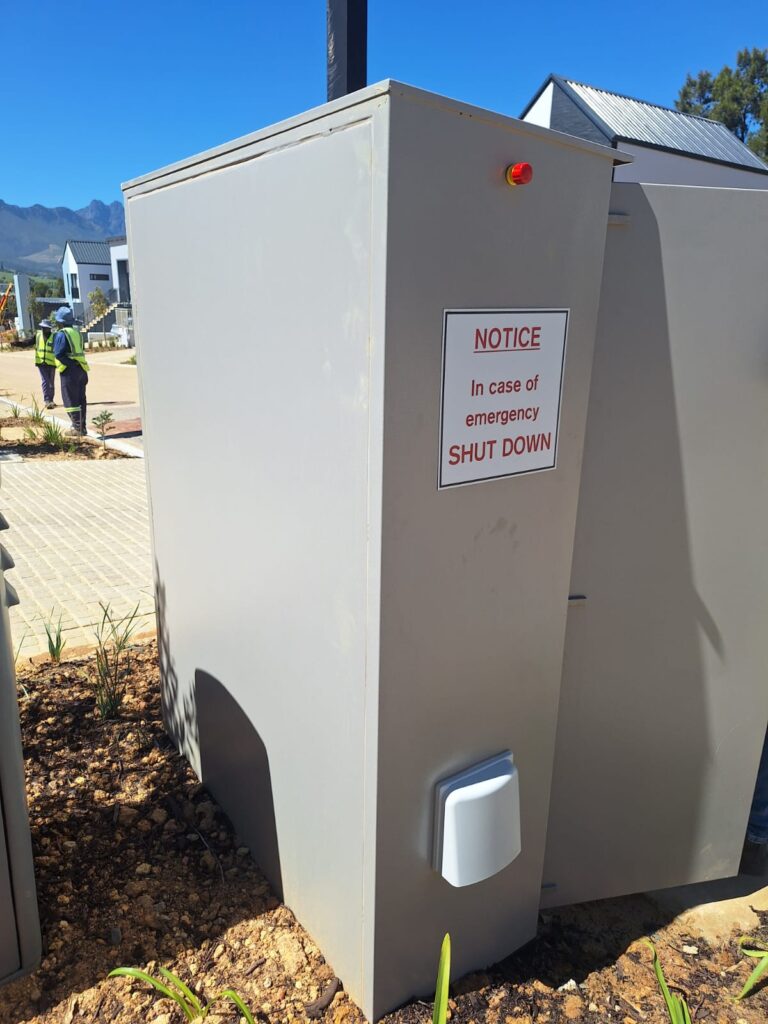
Design Philosophy: Dual-Zone Architecture for Optimal Cooling
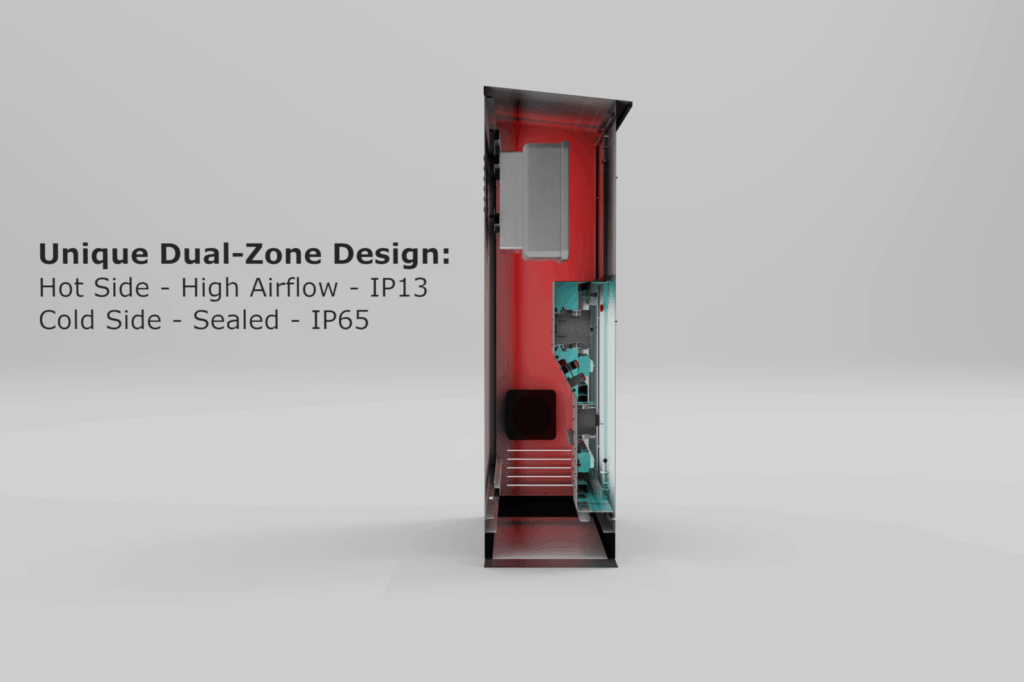
Segregating Hot and Cool Zones To address the thermal challenge, we conceptualized a dual‑zone enclosure. The first zone—termed the “ventilated zone”—is intentionally less protected from the elements, allowing natural convection to remove heat efficiently. This area houses high‑power components that benefit most from forced airflow. The second zone—the “protected zone”—encases sensitive switchgear, PV modules, communication hardware, and remote monitoring equipment. It is sealed to an IP65 rating, ensuring water ingress is prevented while still permitting heat dissipation through strategically placed ventilation grilles.
The dual‑zone approach offers several advantages:
1. Targeted Cooling: High‑power devices receive direct airflow, reducing their thermal load without over‑cooling the entire cabinet.
2. Compliance with Environmental Standards: The IP65 enclosure protects against spray‑grade water, making it suitable for outdoor installation in wet climates.
3. Modular Future‑Proofing: Each zone can be upgraded independently, allowing us to incorporate newer cooling technologies or expand capacity without redesigning the whole cabinet.
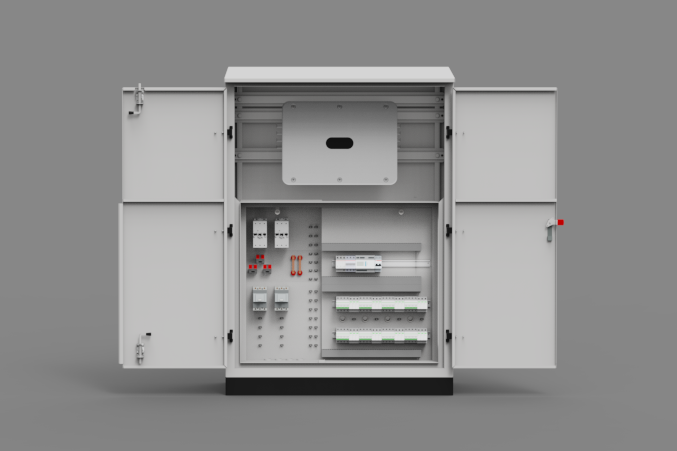
Materials, Fan Strategy, and IP65 Compliance: Engineering the Safe Zone
Robust Construction and Strategic Fan Placement For the ventilated zone, we selected a lightweight aluminum alloy that offers excellent thermal conductivity. The material choice was driven by the need for fast heat transfer from the inverter’s heat sinks to the exterior environment. High‑speed axial fans (rated at 2 m³/min) are mounted directly above each heat‑sink module, creating a focused airflow that bypasses the hot spot. In the protected zone, we integrated a secondary fan array that pulls cooler air from the ventilated zone and circulates it around the sensitive components, maintaining a stable temperature differential of less than 5 °C.
Achieving IP65 compliance required a meticulous sealing strategy. We used molded rubber gaskets at all seams and incorporated a weather‑proof cover for the panel openings. The sealed zone’s ventilation grilles are designed with fine mesh that allows air movement but blocks water droplets, ensuring continuous operation even during heavy rainfall.
During the prototype phase, we conducted CFD simulations to validate airflow patterns. The results confirmed that the fan configuration maintained the desired temperature gradient while keeping pressure drops within acceptable limits, preventing fan stalling and ensuring consistent cooling performance.
Field Deployment, Performance Gains, and Future Scalability
Real‑World Validation and Long‑Term Benefits After rigorous testing, the dual‑zone enclosure was installed on the residential estate’s central energy hub. Post‑deployment monitoring showed a 35 % reduction in peak internal temperatures compared to the original cabinet, with the average operating temperature dropping from 55 °C to 38 °C. The inverter’s efficiency increased by 2 %, translating to an estimated annual energy savings of 1.5 kWh per unit.
Beyond the immediate thermal improvements, the enclosure’s modular design has facilitated seamless integration of newer monitoring sensors and an upgraded inverter model last year. The IP65 sealed zone ensured that the addition of a weather‑proof display panel did not compromise the system’s water‑resistance integrity.
Looking ahead, the dual‑zone concept can be scaled to larger solar farms or distributed energy microgrids. By adjusting fan speeds and adding adaptive heat‑pipe elements, the enclosure can accommodate higher power densities without sacrificing reliability.